Video content now drives more engagement, conversions, and search visibility than any other content format, and if you’re wondering how to learn video marketing in 2026, you’re tapping into one of the highest-demand skills in the entire digital marketing industry. This guide covers everything from short-form video strategy to platform-specific tactics and the tools you need to actually get results, whether you’re building a personal brand, running a business, or looking to get hired as a video marketer.
What Is Video Marketing?
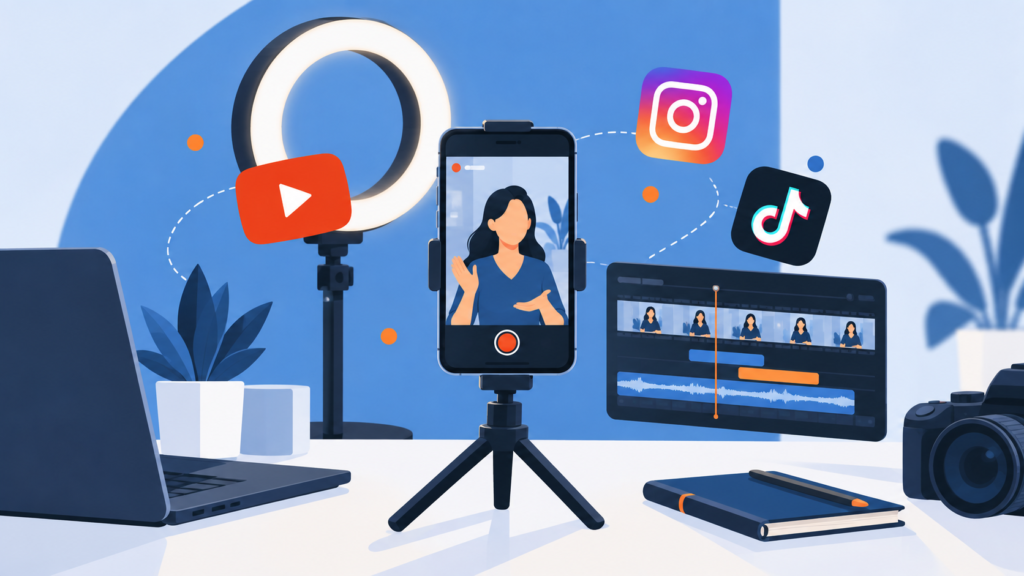
Video marketing is the practice of using video content to promote a brand, product, or service across platforms like YouTube, Instagram, TikTok, LinkedIn, and even Google Search itself, since video results increasingly appear directly in search rankings. It spans everything from short-form Reels and Shorts to long-form YouTube tutorials, webinars, and paid video ads. Unlike static content, video combines visual storytelling with audio and motion, which is exactly why it consistently outperforms text and image posts across almost every social and search platform in 2026.
Why Video Marketing Matters More Than Ever In 2026
Short-form video consumption has continued to climb, with platforms like Instagram Reels, YouTube Shorts, and TikTok prioritizing video-first content in their algorithms. At the same time, Google has increasingly integrated video results into search rankings and AI Overviews, meaning a strong video strategy now directly impacts your SEO visibility, not just your social presence. Brands are also shifting significant ad budgets toward video creative because it consistently delivers higher engagement and conversion rates compared to static image ads, making video skills essential for anyone working in performance marketing today.
Step 1: Understand The Different Types Of Video Marketing
Before diving into production, it’s important to understand the core categories you’ll be working with. Short-form video (under 60 seconds) dominates discovery and brand awareness on Instagram, YouTube Shorts, and TikTok. Long-form video (8-20 minutes) builds authority and works well for tutorials, reviews, and in-depth storytelling on YouTube. Paid video ads run across Meta, YouTube, and Google’s Performance Max campaigns, while live video and webinars are increasingly used for product launches, Q&As, and community building. Knowing which format suits your goal is the first real decision point in any video strategy.
Step 2: Learn The Fundamentals Of Scriptwriting And Storytelling
Every high-performing video starts with a strong hook, usually within the first 2-3 seconds, followed by a clear structure that keeps viewers watching. Learning basic scriptwriting frameworks like Problem-Agitate-Solution or the classic hook-body-CTA structure will dramatically improve your watch time and engagement. This overlaps significantly with copywriting skills you’d use in ad creative, similar to what’s covered in a beginner’s guide to learning SEO, where compelling headlines and structure drive both rankings and clicks.
Step 3: Get Comfortable With Basic Video Production
You don’t need expensive equipment to start. A smartphone with good lighting, a simple lavalier mic, and free editing apps like CapCut or DaVinci Resolve are enough to produce professional-looking content in 2026. Focus on learning basic principles: framing, natural lighting, clean audio, and simple cuts before investing in advanced gear or software. Most beginners overinvest in equipment and underinvest in actually learning composition and pacing, which matters far more for performance.
Step 4: Master Platform-Specific Video Strategy
Each platform rewards different video behaviors, and understanding these differences is critical. YouTube favors longer watch time and searchable, keyword-optimized titles and descriptions. Instagram and TikTok reward fast hooks, trending audio, and native-feeling content that doesn’t look overly polished or “ad-like.” LinkedIn video performs best with professional, value-driven content, often without music, since many users watch on mute in workplace settings. Learning to adapt the same core message across these different formats is a skill that takes practice but pays off significantly in reach.
If you want a structured way to learn video marketing alongside broader digital skills like SEO, paid ads, and content strategy, our Digital Marketing Mastery course covers video marketing as part of a complete, hands-on curriculum with mentor support rather than scattered tutorials.
Step 5: Learn Video SEO And Discoverability
Video SEO is often overlooked, but it’s one of the highest-leverage skills you can develop. This includes writing keyword-rich titles and descriptions, using accurate closed captions (which also improve accessibility and watch time), creating custom thumbnails that improve click-through rate, and structuring your content around topics people are actively searching for. Since AI-powered search results now frequently surface video content directly in answer boxes, optimizing for video SEO in 2026 also means optimizing for how AI engines summarize and cite your content, not just traditional search rankings.
Step 6: Understand Paid Video Advertising
Organic reach alone often isn’t enough to scale a brand, which is why understanding paid video ads matters. This includes running video ads through Meta Ads Manager, YouTube’s TrueView and Shorts ad formats, and Google’s Performance Max campaigns, which increasingly favor video assets in their automated placements. If you’re building broader paid media skills, it’s worth comparing this with running a Google ad and reviewing how targeting differs across platforms, since video ad strategy overlaps heavily with the same audience and bidding principles used in Meta advertising, similar to concepts tested in Meta Ads interview questions.
Step 7: Learn Basic Analytics And Performance Tracking
Understanding metrics like watch time, average view duration, click-through rate, and drop-off points tells you exactly where your content is losing viewers and why. YouTube Studio, Meta Business Suite, and TikTok Analytics all provide this data for free, and learning to read it properly is what separates marketers who guess from those who consistently improve performance based on real data.
Step 8: Study Trends Without Losing Your Core Message
Trending audio, formats, and challenges can boost discoverability significantly, but chasing every trend without a consistent brand message leads to disjointed content that doesn’t build long-term audience trust. The most successful video marketers in 2026 blend trend-awareness with a consistent voice and message, using trends as a discovery tool rather than the entire strategy.
Step 9: Build A Portfolio Of Real Work
Whether you’re freelancing, applying for jobs, or building your own brand, having a portfolio of actual video work, even personal projects or case studies, matters far more than certifications alone. Document your process, results, and key learnings from each video you produce, since this becomes proof of applied skill when talking to clients or employers, similar to how a broader digital marketing roadmap emphasizes hands-on projects over passive learning.
How Long Does It Take To Learn Video Marketing?
Most beginners can learn the fundamentals of scriptwriting, basic editing, and platform-specific posting within 3 to 4 weeks of consistent practice. Becoming genuinely skilled, meaning you can plan a content calendar, analyze performance data, and adapt strategy across platforms confidently, typically takes 3 to 6 months of hands-on experience creating and analyzing real content.
Do You Need Expensive Equipment To Start Video Marketing?
No. Most successful video marketers in 2026 started with just a smartphone and free editing apps. What matters far more than equipment is understanding hooks, pacing, platform-specific behavior, and analytics, all of which can be learned without spending money on gear. Investing in better equipment makes sense only after you’ve validated a content strategy that’s already getting results.
Final Thoughts
Video marketing has become one of the most essential skills in digital marketing heading into 2026, influencing everything from organic reach to paid ad performance to search visibility itself. The fastest way to actually get good at it isn’t watching more tutorials, it’s creating consistent content, tracking real performance data, and adapting based on what the numbers tell you. If you want a structured, mentor-guided path that covers video marketing alongside SEO, paid ads, and full-funnel digital strategy, our Digital Marketing Mastery course is designed to take beginners from zero to job-ready with practical, project-based learning.
For platform-specific best practices, YouTube Creator Academy and Meta’s official video ads guidelines are useful resources to stay current as features and algorithms evolve.
Meta Title:
How To Learn Video Marketing In 2026: Beginner’s Guide
Meta Description:
Learn video marketing in 2026 with this step-by-step guide covering scripting, editing, platform strategy, video SEO, and paid video ads for beginners.